HVAC Noise Control
Duct silencers and attenuators, plenum treatment, plant-room isolation and pipe and duct lagging that take the roar, hiss and hum out of air-conditioning and ventilation systems across offices, hotels and clinics in Greater Accra.
Air-conditioning is meant to make a space comfortable — not to fill it with a roar, a hiss or a persistent hum. When an HVAC system is noisy, the sound is usually travelling by a specific route that can be identified and treated: along the ducts, out of the diffusers, or through the structure from the plant. Soundproof Ghana engineers HVAC noise control — duct silencers, plenum treatment, plant isolation and lagging — for offices, hotels and clinics across Greater Accra. Book a free noise assessment: +233 20 531 3333.
What HVAC Noise Control Is
Heating, ventilation and air-conditioning systems generate noise in several distinct ways, and controlling them well means treating the right one. Fan and unit noise is produced at the air-handling unit or fan-coil and carried along the ductwork to wherever the duct opens — so a quiet-looking grille can deliver the roar of a plant room two floors away. Air-rush (regenerated) noise is made at the grille or diffuser itself when air moves too fast through it, a hiss that no amount of duct silencing will fix. Structure-borne noise is the plant’s own vibration humming through the building frame. And duct break-out is sound radiating through the thin walls of a duct as it passes over a quiet room.
HVAC noise control is the discipline of identifying which of these routes dominates and treating it at the right point — without strangling the airflow the system needs to do its job. That last constraint is what separates real acoustic engineering from a well-meant lining that chokes the duct and leaves the room warm and still noisy.
When to Specify HVAC Noise Control
Specify it wherever mechanical cooling or ventilation is undermining the use of a space. The common Ghana cases are: offices and boardrooms where fan-coil roar competes with meetings and video calls; hotels where guest-room comfort and reviews depend on a quiet supply; clinics and consult rooms where a hissing diffuser destroys both calm and speech privacy; studios, cinemas and worship venues that need near-silent air handling so the room’s own acoustics are not spoiled; and plant rooms and adjacent occupied spaces where air-handling units, chillers and pumps hum through the structure. It is also specified at design stage, where silencers, isolation and diffuser selection built into the mechanical layout cost a fraction of retrofitting after complaints.
Our Method — Which Pillars We Use
HVAC noise control draws on absorption, mass and decoupling, applied precisely to the route that is actually carrying the sound.
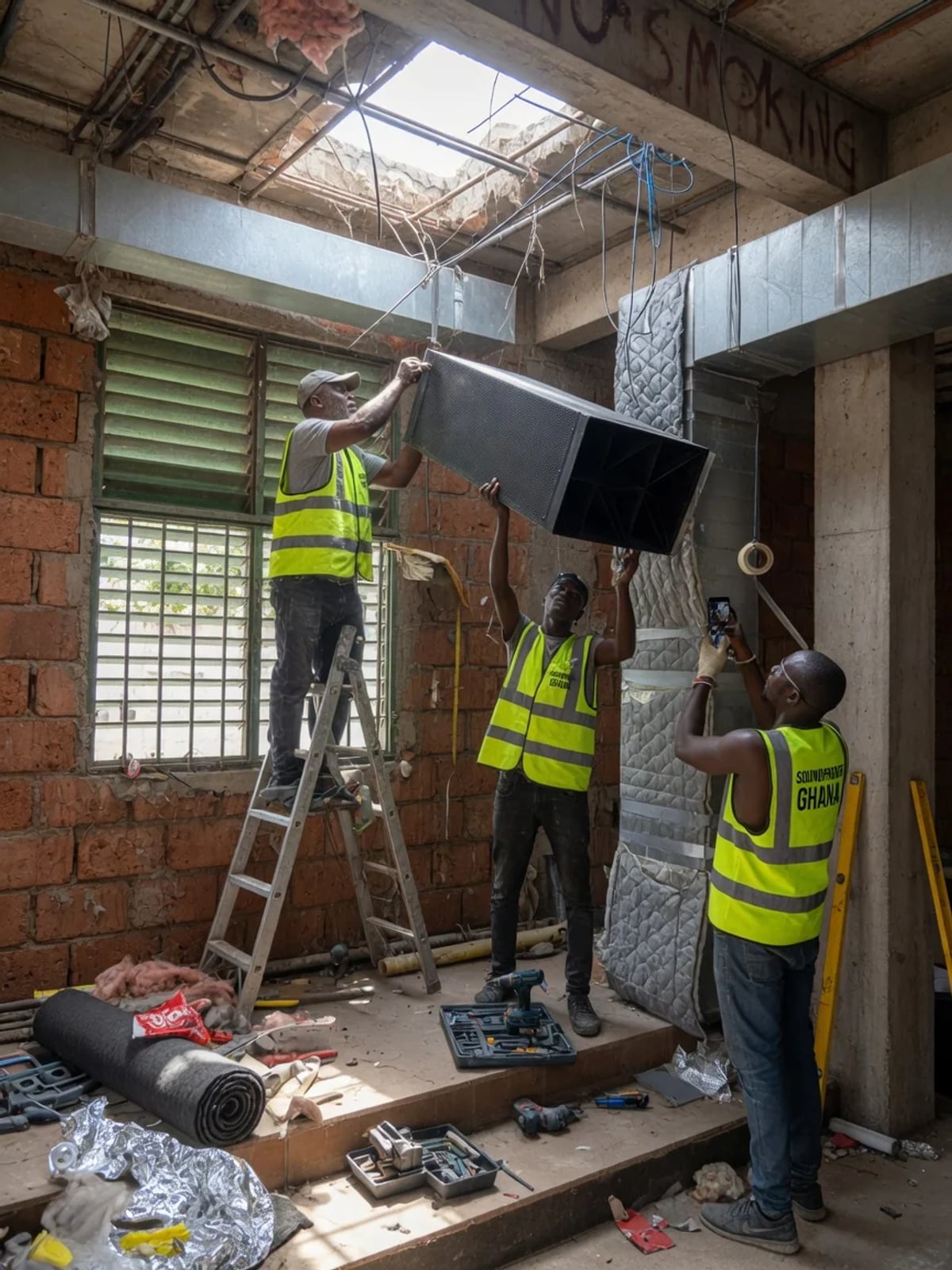
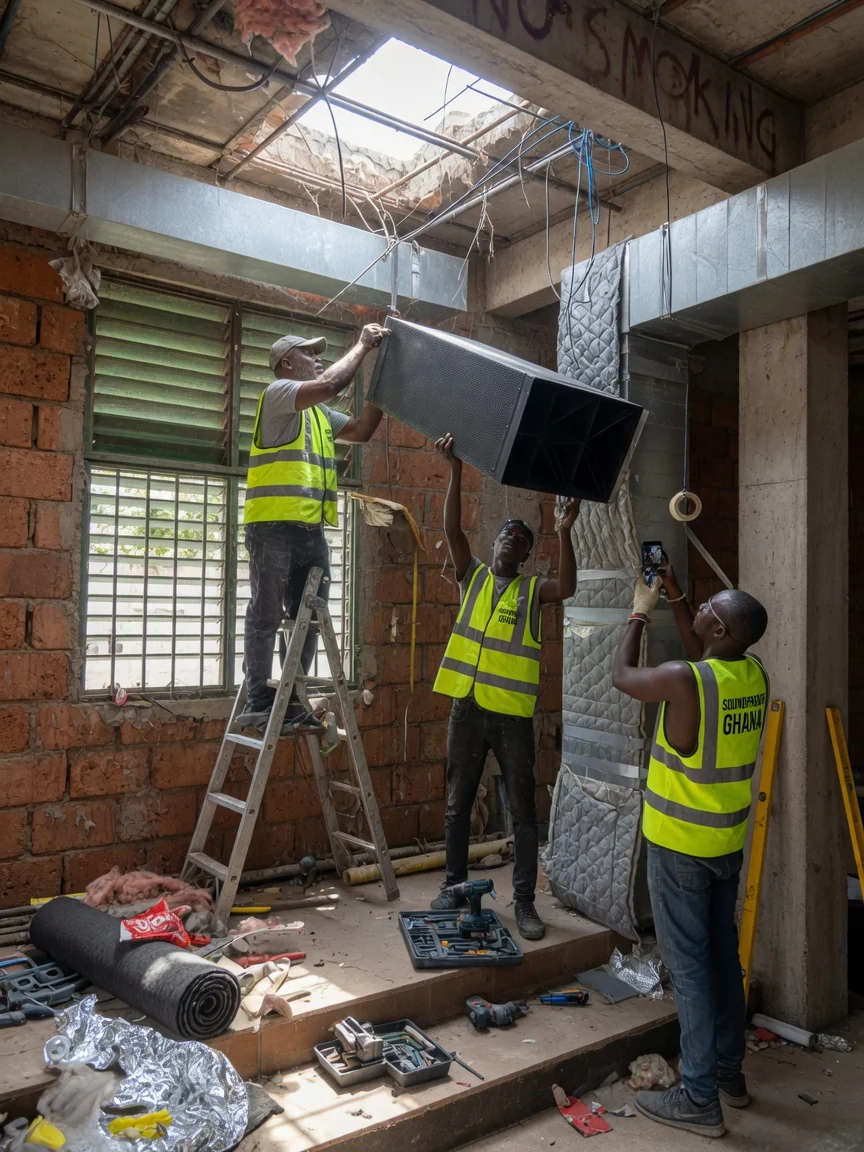
- Duct silencers and attenuators: in-line absorptive silencers, sized to the airflow and the target, attenuate fan and unit noise travelling along the ducts without an unacceptable pressure drop. Splitter and pod attenuators are selected for the frequencies that matter in your system.
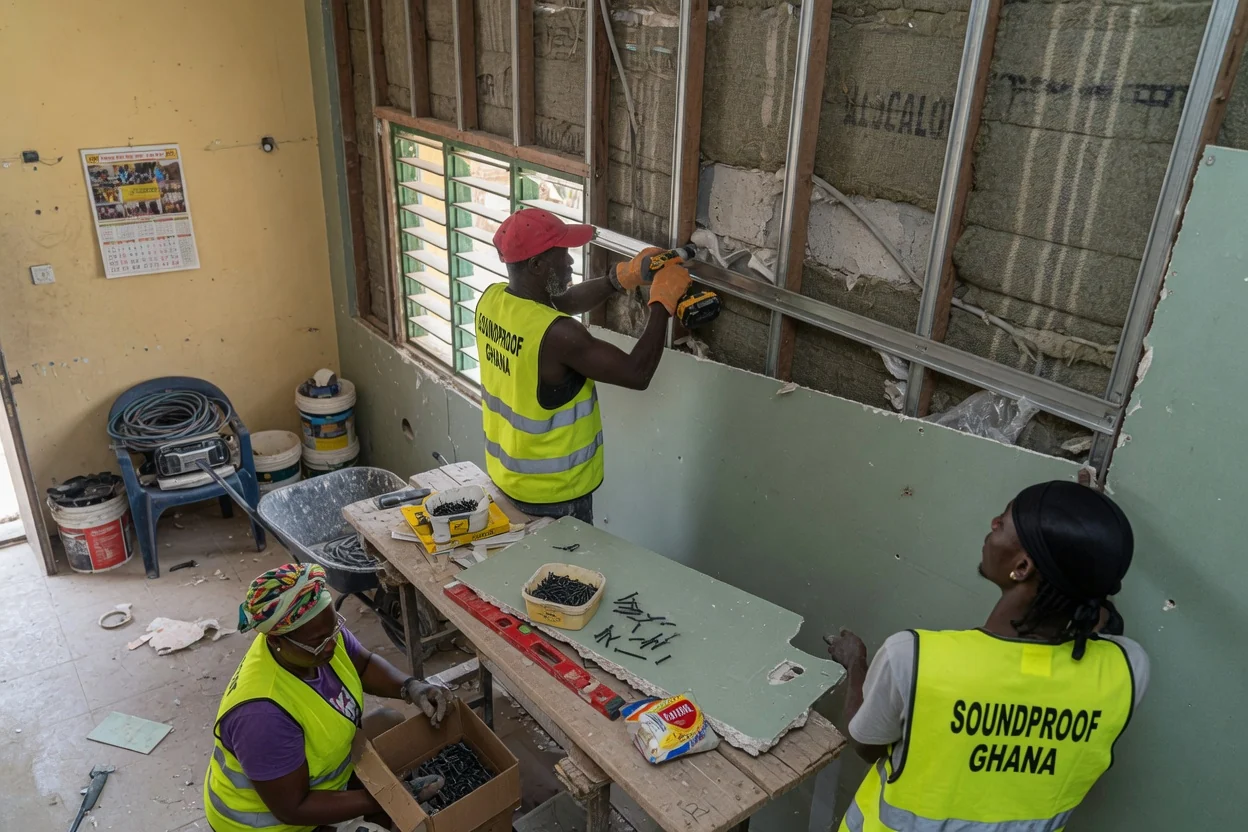
- Plenum and return treatment: where units discharge into a room or a ceiling void, acoustic-absorptive lining in the plenum and on returns soaks up noise before it reaches the space. In humid Accra and Tema we specify mineral-wool and moisture-resistant facings, not bare foam.
- Plant isolation (decoupling): air-handling units, condensers, chillers and pumps are mounted on correctly selected spring or neoprene isolators, with flexible duct and pipe connectors, so their vibration does not enter the structure and re-radiate elsewhere.
- Duct and pipe lagging (mass): noisy duct runs and pipes passing over quiet rooms are wrapped with mass and absorption to stop break-out noise radiating through their thin walls.

Typical Result Ranges
Well-targeted HVAC treatment typically takes a system from intrusive to a comfortable background — the difference between a fan-coil you have to talk over and one you stop noticing. Because the fix depends on which route dominates, we express the outcome as a measured reduction at the affected position rather than a single universal figure: an in-duct silencer knocks down the fan roar carried along the duct; a diffuser or plenum fix removes air-rush hiss; isolation stops the structural hum. Where a room needs to be genuinely quiet — a studio, cinema or consult room — we design the whole air path to a low background target and verify it with the system running at normal duty. We set that target with you at survey and confirm it before handover.
Honest Boundaries
HVAC noise control is route-specific, and honesty starts with diagnosis: treating the wrong path spends money and leaves the noise, so we measure before we specify. We will not fit a silencer or lining that chokes the airflow — cooling performance is a hard constraint, and a system that runs warm to run quiet is a failure, not a fix. We do not promise silence; we commit to a measured reduction to a target agreed at survey, verified with the system at its normal duty. And where the real source is a compressor or chiller vibrating through the slab, that is a vibration-isolation problem we address at the plant, because no amount of duct treatment silences a structure-borne hum. Everything we commit to is a number we can measure before and after.
Related Services
HVAC noise rarely sits alone in a building’s mechanical picture. These pair naturally with it:
- Generator Acoustic Enclosures — the same silencer and airflow discipline applied to standby gensets
- Vibration Isolation — for plant humming through the structure rather than down the duct
- Commercial & Venue Acoustic Fit-Out — where near-silent air handling protects a room’s acoustics